Secure Private File Hosting: Best Solutions for 2025
Secure Private File Hosting: Best Solutions for 2025
Discover the top private file hosting services for secure data storage. Compare features like encryption, self-hosting, and privacy. Protect your files today.
Quick answer: what is the best secure private file hosting in 2026?
There is no single best private file host — the right choice depends on whether you need to publish files to the public internet with a private, expiring link, or store and sync private files inside your own cloud or self-hosted server. Those are two different products, and mixing them up is why most “most secure file hosting” lists are useless.
- Private sharing over the public internet — you upload a file, send one link, and control who opens it and when it dies: fii.one (upload + private link + expiry + search across your own files), WeTransfer Pro, Dropbox Transfer.
- Zero-knowledge cloud storage (provider mathematically cannot read your files): Proton Drive, Tresorit, Internxt, MEGA, pCloud Crypto (paid add-on only).
- Self-hosted private hosting (you own the hardware and the keys): Nextcloud, Seafile, ownCloud, Filebrowser — maximum control, but you own patching, backups, and uptime.
- Mainstream cloud with private folders (encrypted in transit and at rest, but the provider holds the keys and can scan): Google Drive, OneDrive, iCloud Drive, Box.
- Finding files again after you store them is a separate problem from storing them: fii.one Search works alongside Google Drive search and Everything (local desktop search) — see our file hosting search engine guide.
Rule of thumb: if a lawyer, doctor, or auditor would care about the file, pick zero-knowledge or self-hosted. If you just need to hand a big file to a client without it living on the open web forever, pick a private-link host with expiry.
What is private file hosting?
At its core, private file hosting is a method of storing, managing, and sharing files on a server that you control — either through a personal cloud, a dedicated server, or a self-hosted platform. Unlike public services like Google Drive, Dropbox, or WeTransfer, private file hosting removes the middleman entirely. You own the infrastructure, the encryption keys, and the access rules. No third-party company scans your data for advertising, no algorithm indexes your documents, and no hidden terms of service dictate what you can or cannot store.
Think of it as the difference between renting a storage unit from a corporation that keeps a master key and building your own locked vault on your own land. With private file hosting, you are the sole custodian. Every upload, download, and share link is governed by rules you set — from password protection and expiration dates to IP whitelisting and end-to-end encryption. This level of control is essential for freelancers handling client contracts, remote teams sharing proprietary code, or families safeguarding sensitive medical records.
💡 Key Insight: Private file hosting isn't just about privacy — it's about sovereignty. You decide where your data lives (on-premises, a trusted VPS, or a dedicated server), how it's encrypted (AES-256, TLS, zero-knowledge protocols), and who gets access. Public clouds excel at convenience; private hosting excels at control.
The technical setup can range from simple to sophisticated. At the entry level, you can install a ready-made solution like Nextcloud, Seafile, or ownCloud on a $5-per-month VPS. These platforms offer web interfaces, mobile apps, file versioning, and collaborative editing — all running under your domain. On the advanced end, you might deploy a hardened file server using Syncthing combined with a VPN, or run a dedicated NAS (Network Attached Storage) device at home with RAID redundancy. In every case, the fundamental promise remains the same: your files, your rules.
What distinguishes private file hosting from traditional "cloud storage" is the absence of a shared responsibility model where the provider handles security but also retains access. With private hosting, you take on the operational tasks — backups, updates, uptime monitoring — but in exchange, you eliminate data mining, government requests without a warrant, and the risk of a provider suddenly changing its terms or shutting down its service. For professionals handling legal documents, financial records, or creative intellectual property, this trade-off is often worth the extra effort.
🔐 Full Encryption Control
With private file hosting, you manage the encryption keys. Even if the server is compromised, your files remain unreadable without the key. Many solutions support client-side encryption before data ever touches the disk.
📎 Unlimited Sharing Rules
Create share links with custom passwords, expiry dates, download limits, and even one-time access. Revoke access instantly. No shared link ever exposes your files to unintended audiences.
🌍 Geographic Data Control
Choose exactly where your data resides — a server in your country, a specific cloud region, or even on a device in your office. Comply with GDPR, HIPAA, or other data residency requirements easily.
📊 No Usage Quotas or Throttling
Public providers limit daily transfers and storage. Private file hosting lets you use your own bandwidth and storage resources without artificial caps, hidden fees, or bandwidth throttling.
In practice, private file hosting means you can share a 10 GB video project with a client at 3 AM without worrying about a public provider's daily limit, or store confidential business plans without a corporation's AI scanning the contents. It empowers you to create a personalized sharing ecosystem — complete with custom branding, user management, and audit logs — all while keeping your data away from prying eyes. For anyone who values digital autonomy, private file hosting is not a luxury; it's a fundamental shift from renting space in someone else's building to owning the entire property.
Why private file hosting Matters
In an era where data is the new gold, where you store your files is no longer just a matter of convenience—it is a strategic decision that impacts your security, privacy, and operational independence. Public cloud services like Google Drive, Dropbox, and OneDrive offer ease of use, but they come with a hidden price tag: your data is scanned, analyzed, and often monetized. Private file hosting flips that model on its head, giving you full control over who accesses your files and how they are handled.
When you choose a private file hosting solution, you are making a conscious decision to protect your digital footprint. Whether you are a freelancer sharing sensitive client documents, a small business safeguarding financial records, or an individual who values personal privacy, the stakes are higher than ever. Data breaches, government surveillance, and corporate data mining are not hypothetical risks—they are everyday realities. Private file hosting ensures that your files remain yours, encrypted and accessible only to those you explicitly by those you explicitly authorize.
🔐 Complete Data Sovereignty
You decide where your files are stored, who can access them, and how long they remain available. No third-party algorithms scanning your content, no hidden terms of service that give away your rights.
🛡️ End-to-End Encryption
Modern private file hosting platforms offer zero-knowledge encryption, meaning even at rest and in transit. That means even the hosting provider cannot read your files—only you and your intended recipients hold the keys.
🚫 No Advertising or Data Mining
Public cloud services often scan your documents to build advertising profiles or train AI models. Private file hosting eliminates this entirely—your data is not a product.
⚡ Custom Access Controls
Set expiration dates, password protection, download limits, and granular permissions. You are in full command of every file you share.
💡 Key Insight: The difference between public cloud storage and private file hosting is the difference between renting a room in a shared building and owning your own house with a lock that only you control. In 2024 alone, over 30% of data breaches involved cloud misconfigurations—private hosting drastically reduces your attack surface by keeping your data outting you in charge of the entire security posture.
Beyond security, private file hosting also matters for compliance. If you work in healthcare, legal, or finance, regulations like HIPAA, GDPR, or PCI-DSS require that you maintain strict control over sensitive data. Public clouds often complicate compliance because compliance nightmares when audit time comes. With a private solution, you can log every access attempt, enforce retention policies, and prove exactly who saw what and when.
- Eliminate vendor lock-in — you are not tied to a single ecosystem; migrate your files whenever you want. without losing access or functionality.
- Better performance and uptime — choose your own server location and bandwidth, avoiding the congestion and throttling of shared public infrastructure.
- Peace of mind — knowing that your family photos, business contracts, and personal documents are not being indexed by algorithms or sold to advertisers brings a level of calm that no free tier can offer.
At its core, private file hosting is about respect for your digital autonomy. It is a declaration that your data belongs to you—not to a corporation's bottom line. In a world that increasingly defined by surveillance capitalism, choosing private file hosting is one of the simplest yet most powerful steps you can take to reclaim your privacy and protect what matters most.
Key Features to Look For
Choosing the right platform for your sensitive data goes far beyond comparing storage limits and price tags. When you are evaluating a private file hosting solution, the features you prioritize will directly determine how much control, privacy, and peace of mind you actually get. The market is flooded with options that claim to be secure, but the reality is that many still leave critical gaps in your data sovereignty. To help you cut through the noise, here are the non-negotiable features you should look for before committing to any provider.
🔒 End-to-End Encryption
This is the cornerstone of any true privacy-centric service. End-to-end encryption means your files are encrypted on your device before they ever leave your computer, and only you hold the decryption keys. The provider cannot access your data — even if they are compelled by a legal request or suffer a server breach. Look for solutions that use zero-knowledge architecture so that not even the platform itself can see your file names, folder structures, or contents. Without this, you are essentially handing over the keys to your digital life.
📁 Granular Sharing & Permissions
File hosting is useless if you cannot share files securely with colleagues, clients, or family members. A premium solution offers fine-grained control over every shared link: password protection, expiration dates, download limits, view-only access, and the ability to revoke access at any time. Some platforms also let you restrict sharing to specific email domains or require two-factor authentication for recipients. These controls prevent accidental oversharing and ensure that you remain the ultimate gatekeeper of your data.
🏠 Self-Hosting or Private Cloud Options
For maximum control, consider a solution that allows you to self-host on your own server or a private cloud infrastructure like a NAS device. Self-hosting eliminates third-party dependencies entirely — your data never touches a server you do not own. Even if you prefer a managed service, look for providers that use dedicated storage clusters or offer on-premise deployment options. This is especially critical for businesses subject to strict data residency regulations such as GDPR, HIPAA, or SOC 2.
🔄 File Versioning & Recovery
Accidental deletions and overwrites happen to everyone. A robust private file hosting platform retains previous versions of your files so you can roll back to any point in time. Look for versioning that is configurable — you want control over how many versions are kept and for how long. Combined with a reliable trash or recycle bin recovery feature, version history is your safety net against ransomware attacks, human error, and data corruption. Some platforms even offer snapshot-based backups for entire folder structures.
💡 Key Insight: The most secure private file hosting platforms combine end-to-end encryption with self-hosting capabilities. However, even a fully managed service with zero-knowledge encryption can be excellent — just ensure the provider has a publicly audited security framework and a clear data deletion policy when you cancel your account.
- Client-side encryption keys — Ensure the provider never stores or escrows your private keys on their infrastructure. Some platforms let you use your own key management system for extra control.
- Cross-platform access — Your solution should offer native apps for Windows, macOS, Linux, iOS, and Android, plus a functional web interface for quick access from any device. Offline sync capabilities are a major plus.
- Two-Factor Authentication (2FA) — Password-only protection is no longer enough. Look for support for TOTP apps, hardware security keys (U2F/FIDO2), or biometric login to secure your account from unauthorized access.
- File size and type support — If you work with large media files, databases, or backups, verify that the platform handles files over 10GB without performance degradation. Some premium solutions offer chunked uploads for large files.
- Activity logs and audit trails — For professionals and businesses, detailed logs of who accessed, shared, or modified files are essential for compliance and security monitoring.
Do not overlook the importance of a transparent and fair privacy policy. Many providers bury terms that allow them to scan your files for "abuse" or to share metadata with third parties. A genuinely private file hosting service will have a clear, readable policy that promises zero data mining and no sharing of your information without explicit consent. Read the fine print carefully — your privacy depends on it.
Finally, test the user experience. Even the most secure platform is useless if it is too complex to use daily. Look for intuitive folder management, drag-and-drop uploads, seamless search, and fast file previews. The best private file hosting solutions strike a balance between rock-solid security and smooth usability. Take advantage of free trials to evaluate speed, reliability, and customer support before you commit your sensitive data to any platform.
How to Get Started with private file hosting
Taking control of your data doesn't have to be complicated. Whether you're a freelancer protecting client work, a small team avoiding third-party snooping, or just someone tired of monthly subscription fees, getting started with private file hosting is easier than you think. The key is choosing the right approach for your technical comfort level — then following a simple setup path.
💡 Key Insight: Private file hosting isn't an all-or-nothing switch. You can start small with a single folder on a Raspberry Pi and scale up to a full server rack as your needs grow. The hardest part is picking the first option that fits your life today.
Most newcomers follow one of three paths. Each balances ease, cost, and control differently. Let's break them down so you can decide which suits your "starter" gear.
🖥️ Self-Hosted on Old Hardware
Run software like Nextcloud or Seafile on any spare PC, laptop, or Raspberry Pi. Zero monthly cost beyond electricity. Requires basic Linux or Docker knowledge — plenty of YouTube tutorials exist. Best for techies who love tinkering.
☁️ Cloud VPS + Open-Source Stack
Rent a small $5/month VPS (DigitalOcean, Linode) and install Filebrowser, ownCloud, or Pydio. You control the keys but skip hardware maintenance. Great balance for anyone comfortable with SSH and basic server setup.
📦 Turnkey NAS Appliance
Buy a Synology or QNAP NAS, plug in drives, and enable their built-in file sharing apps. Takes 15 minutes out of the box. More expensive upfront, but zero configuration needed. Ideal for non-technical users who want privacy without hassle.
🔒 Encrypted Cloud-First Sync
Use a service like Tresorit or Sync.com that encrypts everything client-side. You don't own the hardware, but your files are unreadable by the provider. Good stepping stone into private file hosting when you're not ready to manage infrastructure.
Once you've chosen your path, follow these three universal steps to get your first private file hosting setup running:
- Step 1: Map your storage needs. List the file types you'll host (documents, media, backups) and estimate total size. For under 100 GB, a Raspberry Pi with an external SSD works. Over 1 TB, grab a proper NAS or VPS with block storage.
- Step 2: Set up remote access securely. Even if you only need local access today, install a VPN (Tailscale or WireGuard) or use a reverse proxy with SSL. Never expose a file server directly to the internet without authentication layers.
- Step 3: Test sync and backup. Upload a few important files, then access them from your phone or another computer. Schedule automatic backups of your private file hosting server — because even the most secure host needs a safety net.
The most common mistake? Overthinking. Pick the simplest option that gets a single file from your laptop to your phone without passing through Google or Dropbox. You can always upgrade later. Within an afternoon, you'll have the foundation of a truly private file hosting setup — and the satisfaction of knowing your data stays yours.
Best Practices for private file hosting
Running your own private file hosting setup gives you complete control over your data, but that control comes with responsibility. Without the guardrails of a public cloud provider, the security and reliability and accessibility of your files rest squarely on your shoulders. The good news? A handful of proven practices can make your private file hosting both secure and effortless to maintain.
💡 Key Insight: The most secure private file hosting setup is one you barely have to think about. Automation and layered security remove friction while keeping your data safe from being a daily chore.
Encrypt everything — at rest and in transit. This is non-negotiable. Use TLS/SSL for all connections to your server, and enable server-side encryption for stored files. For an extra layer of protection, implement client-side encryption so files are encrypted before they ever leave the uploader's device. Even if your server is compromised, the data remains unreadable.
Enforce strict access controls. Role-based access control (RBAC) lets you grant granular permissions — read-only, upload-only, full access — to different users. Regularly audit who has access to what, and revoke permissions the moment they're no longer needed. The principle of least privilege applies here: give people the minimum access required to do their job.
- Regularly audit access logs — Look for unusual login patterns, failed attempts, or downloads from unexpected IPs.
- Enable two-factor authentication (MFA) — Even a strong password can be compromised. Multi-factor authentication adds a critical second layer.
- Set expiration policies — Shared links and temporary access should auto-expire after a set period.
🔐 End-to-End Encryption
Encrypt files on the client side before upload. Your server stores only ciphertext, so even a breach leaves your infrastructure.
📋 Immutable Audit Logs
Maintain tamper-proof logs of every file upload, download, and deletion. Use these for compliance and threat detection.
⏰ Automated Backup Schedules
Back up your file store and database daily — ideally to a separate geographic location. Test restores monthly.
🛡️ Rate Limiting & Throttling
Prevent brute-force and abuse by limiting login attempts and download speeds for each IP address.
Keep your software stack updated. Whether you're using Nextcloud, ownCloud, Seafile, or a custom solution, outdated software is the leading cause of breaches. Subscribe to security advisories for your platform and apply patches within 48 hours of release. Automate updates where possible.
Implement a robust backup strategy. Your private file hosting is only as good as your last backup. Follow the 3-2-1 rule: three copies of your data, on two different media types, with one copy stored off-site. Encrypt your backups and test a full restoration at least once a quarter. A backup you've never tested is a wish, not a plan.
Monitor storage usage and set quotas. Unchecked uploads can fill your disk, causing service outages and data corruption. Set per-user quotas and configure alerts when storage reaches 80% capacity. This keeps your private file hosting reliable and predictable.
Finally, document your setup. Write down your server configuration, backup procedures, recovery steps, and access policies. Share this with a trusted team member so someone else can step in if you're unavailable. A well-documented system is a resilient one.
By following these best practices, you'll transform your private file hosting from a DIY experiment into a professional-grade data management solution — one that protects your privacy, meets your workflow needs, and scales with you over time.
Frequently Asked Questions
Is private file hosting the same as zero-knowledge storage?
No. “Private” usually means other users cannot see your files — but the provider still holds the encryption keys and can technically read, scan, or hand over your data. Zero-knowledge means the encryption key never leaves your device, so the provider cannot decrypt your files even under legal order. Proton Drive, Tresorit, and Internxt are zero-knowledge by default; Google Drive, OneDrive, and Box are private-but-readable. Check which one your compliance rules actually require before you pay.
Should I self-host or use a private cloud host?
Self-hosting (Nextcloud, Seafile) gives you full key ownership and no per-seat billing, but you become responsible for security patches, offsite backups, TLS certificates, and uptime — a real cost in hours. A managed private host removes that operational load and usually gives you better download speed via CDN. Practical split: self-host if you already run a server and have a backup routine; use a managed host if the alternative is an unpatched box in a closet.
How do I share a private file without making it public forever?
Use a host that supports link expiry and access control, not a permanent public URL. The safe pattern is: upload, generate a single link, set an expiry date (or a download limit), send the link through a separate channel from any password, and revoke it once the recipient confirms receipt. Also remember that CDN caches can serve a file briefly after you delete it — for genuinely sensitive material, encrypt the file locally before upload so an expired link is not your only defence.
What is private file hosting and how does it differ from public cloud storage?
Private file hosting means you store your files on servers you control — either self-hosted hardware or a private cloud — rather than on shared public platforms like Google Drive or Dropbox. The key difference is ownership and privacy: you control who accesses your data, where it's stored, and how it's encrypted. No third‑party company scans your files for ads or AI training, giving you true data sovereignty.
How secure is private file hosting for sensitive or confidential data?
Security depends on how you set it up. With private hosting, you can enforce end‑to‑end encryption, choose strong authentication methods (like 2FA or SSO), and control firewall rules. Many solutions also support at‑rest encryption on the server. When configured correctly, private file hosting is significantly more secure than public alternatives because your files never leave your infrastructure without your explicit permission.
Can I access my private file hosting server from multiple devices and locations?
Yes. Most modern private file hosting platforms offer web interfaces, desktop sync clients (Windows, macOS, Linux), and mobile apps (iOS, Android). You can access and sync your files from anywhere with an internet connection. For remote access, you can set up a VPN, use a reverse proxy with SSL, or leverage built‑in remote access features — all while keeping your data under your control.
What are the typical costs of running a private file hosting server?
Costs vary widely. For a basic self‑hosted setup, you'll need a server (a Raspberry Pi can work for small use, or a VPS for ~$5–$15/month), a domain name (~$10–$15/year), and storage space. Open‑source software like Nextcloud or Seafile is free. So an entry‑level private file hosting can cost as little as $5–$20 per month — often cheaper than premium public cloud plans, especially for large storage needs.
Conclusion
The shift toward private file hosting is not just a trend—it's a fundamental reclamation of digital autonomy. Throughout this article, we've explored how storing your files on your own terms eliminates the compromises that come with free or cheap public cloud services. From end-to-end encryption to complete control over data residency and sharing permissions, the advantages are both practical and philosophical.
💡 Key Insight: When you choose private file hosting, you aren't just selecting a storage method—you are making a statement about who should have access to your personal and professional data. The cost of "free" cloud storage is often your privacy, and the only way to avoid that price is to host your files yourself or with a privacy-first provider.
The technical barriers that once made self-hosting daunting have all but disappeared. Modern solutions like NextCloud, Syncthing, and dedicated private cloud devices offer plug-and-play setups with mobile apps, automatic backups, and granular sharing controls. You no longer need to be a system administrator to enjoy the peace of mind that comes from knowing your photos, documents, and sensitive work files are stored exactly where you want them—and nowhere else.
Whether you choose to run a server on a Raspberry Pi at home, subscribe to a zero-knowledge cloud provider, or deploy a dedicated NAS appliance, the core promise remains the same: your data, your rules. No more worrying about a remote server scanning your files for advertising metadata, no more sudden policy changes that revoke your access, and no more wondering who else might be peeking into your private documents.
🔐 Uncompromised Security
Client-side encryption and your own infrastructure mean no third party holds the keys to your data. Even the provider—if you use one—cannot decrypt your files.
🌍 Total Location Control
Keep files in your country, on your hardware, under your jurisdiction. Perfect for businesses with compliance requirements or anyone who values data sovereignty.
As we move deeper into an era where data is the most valuable currency, taking responsibility for your own file storage is one of the most empowering decisions you can make. The tools are mature, the community is strong, and the benefits far outweigh the minimal effort required to set things up. If you value your privacy, your time, and your peace of mind, making the switch to private file hosting is not just a smart move—it's the only move that truly puts you in charge.
Take the first step today. Your files—and your future self—will thank you.
Get Started with Secure Private File Hosting: Best Solutions for 2025
Ready to take the next step? Discover the top private file hosting services for secure data storage. Compare features like encryption, self-hosting, and privacy. Protect your files today.
Join thousands of users who trust fii.one for fast, private cloud storage.
Get Started Free →fii.one Team
The fii.one blog brings you guides, tips, and insights on file storage, sharing, and productivity.
← Previous
Top Open Source Google Drive Alternatives for 2024
Next →
Top Google Drive Alternatives for 2024: Secure & Affordable
Related Articles
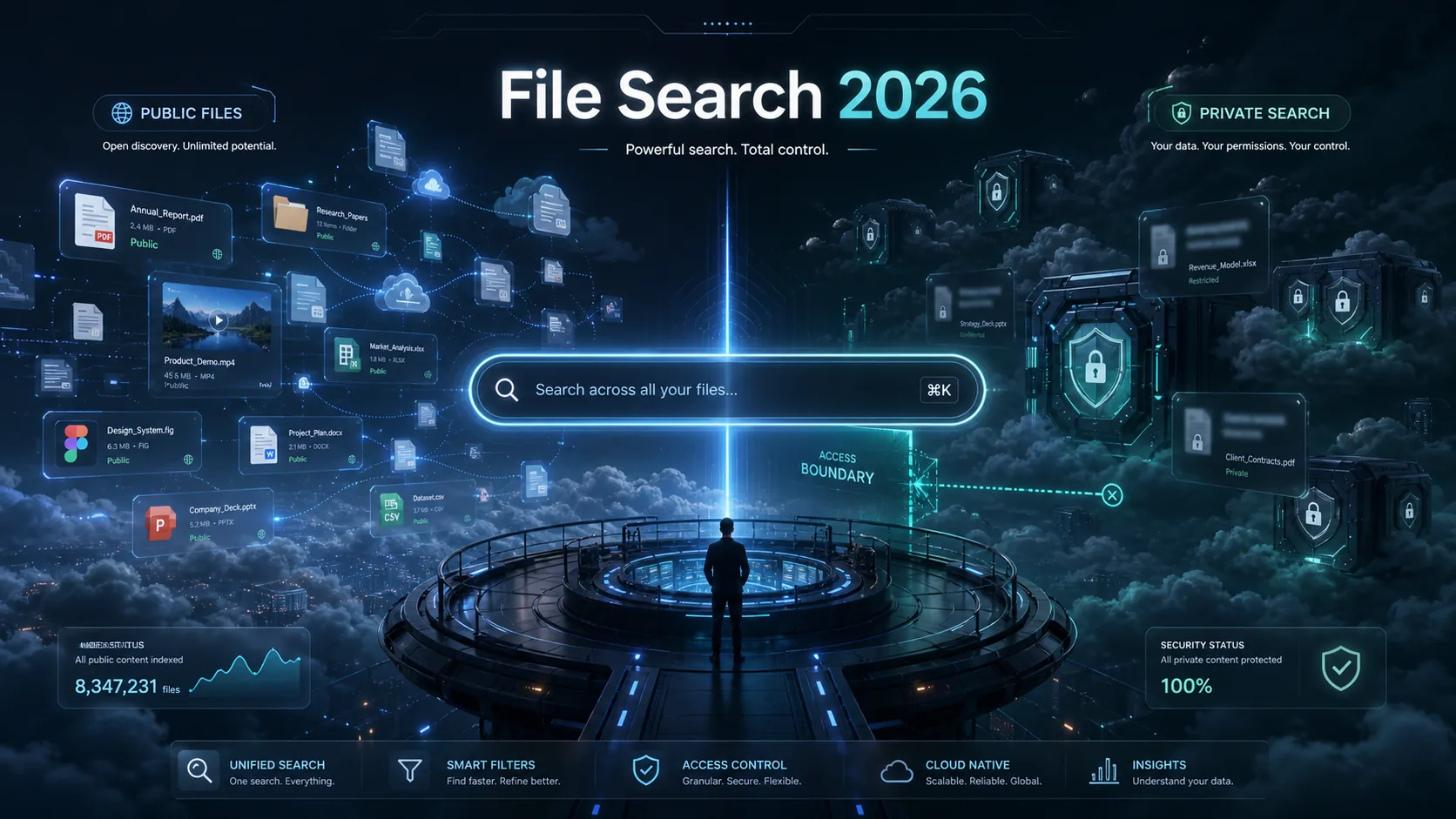
Best File Hosting Search Engines: Find Files Fast in 2026
11 min read

How to Search Files Across MediaFire, Mega & Google Drive in One Place
3 min read
Best Enterprise Dropbox Alternative for Secure File Sharing
8 min read

Understanding Airdrop File Size Limits: What You Need to Know
4 min read