Internxt Review: Speed vs Privacy — Which Actually Wins for Your Use Case?
Internxt Review: Speed vs Privacy — Which Actually Wins for Your Use Case?
Most Internxt reviews focus on features and pricing. This one asks a different question: based on what you actually do with cloud storage, which matters more for you — speed or privacy? The answer determines whether Internxt is the right choice.
How to read this: Find the scenario that best describes your situation. Each section tells you whether Internxt's speed-privacy balance works for you — and what alternatives exist if it does not.
Jump to Scenario A: The Performance-First User
Jump to Scenario B: The Privacy-First User
Jump to Scenario C: The Balanced Professional
Jump to Scenario D: The Undecided Shopper
Quick answer: is Internxt worth it?
Internxt is worth it if privacy is your top priority and you can accept slower sync speeds. It is a zero-knowledge, open-source, GDPR-based cloud storage where the provider cannot read your files. Whether it is the right pick depends on which trade-off you value more:
- Privacy-first buyers — choose Internxt (or Tresorit/Proton Drive) for end-to-end encrypted, zero-knowledge storage where no one but you holds the keys.
- Speed-first buyers — mainstream Google Drive, OneDrive or Dropbox sync faster because they trade some privacy for CDN-backed performance.
- Balanced buyers — keep active work on a fast provider and archive sensitive files in Internxt; then use a file hosting search engine like fii.one to locate files across every account at once.
The rest of this review maps four real-world scenarios so you can match Internxt's speed-versus-privacy balance to how you actually use cloud storage.
The core tension: why Internxt forces this choice
Internxt is built on the Frances Xtorrent decentralized network. This architecture provides genuine privacy — files are encrypted, fragmented, and distributed across nodes that no single operator controls. But decentralized storage trades centralized performance for architectural independence.
Centralized providers (Dropbox, Google Drive) have optimized their networks for speed over decades. Decentralized networks (Internxt, Filecoin) have optimized for resilience and privacy. You cannot have both at the same level without paying a significant premium or accepting trade-offs.
Internxt performs well for its category — it is not slow in absolute terms. But compared to centralized alternatives, upload and download speeds are more variable and more dependent on network conditions. This is the fundamental trade-off that every Internxt review should start with.
Scenario A: The Performance-First User
You upload and download large files daily. You work with video, RAW photos, or large design files. Speed is not a preference — it is a workflow requirement. Every minute spent waiting is money lost.
Does Internxt work for you?
Partially. Internxt's speed is adequate for moderate use — documents, compressed photos, occasional video. For heavy daily video workflows, RAW photography production, or time-sensitive large file transfers, Internxt's decentralized architecture introduces latency that centralized alternatives do not have.
What to do instead
If performance is non-negotiable, use a high-speed centralized provider for your active workflow files. Add fii.one alongside it for zero-knowledge encrypted backup of completed work — fast enough for backup and restore, zero-knowledge for privacy, and unlimited storage so you never manage quotas.
Scenario B: The Privacy-First User
Privacy is your primary requirement. You work with sensitive files — client documents, legal materials, research data, or content that could be targeted. You want zero-knowledge architecture and provider independence.
Does Internxt work for you?
Yes — with conditions. Internxt's decentralized architecture and zero-knowledge encryption address your core requirement. Files are fragmented across nodes, encrypted end-to-end, and controlled by no single provider. This is genuine privacy, not marketing.
The condition: Internxt is more expensive than alternatives with equivalent privacy credentials. fii.one provides the same zero-knowledge architecture at $4.99/month — significantly less than Internxt's pricing tier for equivalent storage.
The honest recommendation
If Internxt's specific decentralized architecture is a requirement for your use case — because you need censorship resistance or node-distributed storage specifically — Internxt earns its place. If you need zero-knowledge privacy without the decentralized layer, fii.one provides equivalent protection at better pricing. Compare fii.one vs Internxt.
Scenario C: The Balanced Professional
You care about both speed and privacy. You do not want to sacrifice one for the other, but you are pragmatic — you understand that every tool has trade-offs. You want the best balanced solution for a professional workload.
Does Internxt work for you?
This is the hardest case to answer because "balanced" means different things. Internxt is better than most for this group — it has a genuinely privacy-forward architecture without being purely theoretical. But the performance trade-off is real enough that heavy users will notice it.
The practical framework
If your active files need speed and completed files need privacy: use two providers. High-speed for active workflow, zero-knowledge for archive and backup.
If you need one provider for everything: fii.one is the strongest balanced option — zero-knowledge, fast enough for professional use, flat pricing, unlimited storage.
If decentralization specifically matters: Internxt is the right answer, and the performance trade-off is the price of that requirement.
Scenario D: The Undecided Shopper
You are evaluating cloud storage options. You have heard Internxt mentioned as a privacy-focused alternative. You are not sure what your priorities are yet — you want to understand the landscape before committing.
Start here
Ask yourself one question: What happens if my cloud provider gets shut down, hacked, or changes policy tomorrow?
If the answer is "I lose some files but I have backups" — your priority is not privacy architecture, it is reliability. Any reputable provider works.
If the answer is "I cannot risk that" — privacy matters, and zero-knowledge providers like fii.one address that need without the performance complexity of decentralization.
If the answer is "I specifically need resistance to government censorship or single-provider shutdown" — Internxt's decentralized architecture is purpose-built for exactly this scenario.
The speed test reality
Raw speed benchmarks vary significantly based on your location, internet connection, and network conditions at any given moment. Internxt's decentralized network means performance depends on which nodes are available and how well-connected they are to your location.
What is consistent: Internxt is not the fastest cloud storage option available. It is also not the slowest. It occupies a middle position where performance is acceptable for most use cases but not optimized for high-volume, time-sensitive workflows.
The bottom line
Choose Internxt if:
You specifically need decentralized, censorship-resistant storage and accept the performance trade-off
Choose fii.one if:
You need zero-knowledge privacy without decentralization, with faster average performance and simpler pricing
Use both if:
Performance-critical active files go to fast storage, completed work and sensitive files go to zero-knowledge backup
See fii.one vs Internxt comparison.
Internxt pricing and plans: what you actually pay
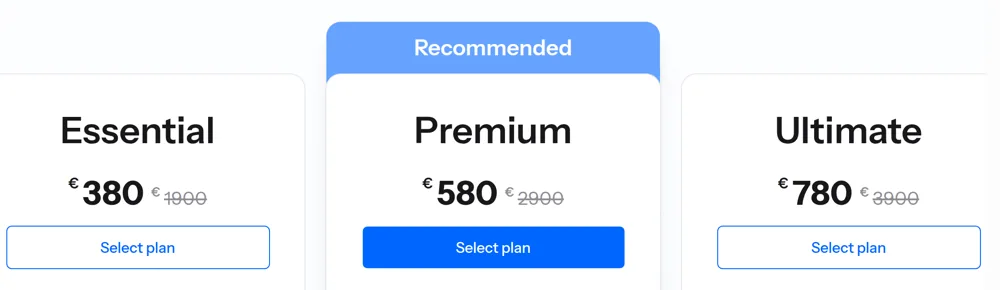
Internxt sells storage on both annual and lifetime plans, and its aggressive lifetime discounts are a big part of its appeal for privacy-conscious buyers who want to pay once and avoid recurring subscriptions. Below is the lifetime tier lineup at the time of writing — the one-time price versus the crossed-out list price shows how steep the promotional discount runs.
| Factor | Internxt | Mainstream (Drive / OneDrive / Dropbox) |
|---|---|---|
| Encryption model | Zero-knowledge, end-to-end (provider cannot read files) | At-rest / in-transit; provider holds keys |
| Open source | Yes (auditable clients) | No (closed source) |
| Sync / download speed | Slower (encryption overhead, smaller network) | Faster (mature CDN infrastructure) |
| Jurisdiction | EU / GDPR (Spain) | US-based (CLOUD Act exposure) |
| Lifetime plans | Yes (pay once) | Subscription only |
| Ecosystem integration | Limited (standalone) | Deep (Office / Workspace / OS-native) |
The pattern is consistent: Internxt trades raw speed and ecosystem depth for privacy guarantees you cannot get from mainstream providers. If your files are sensitive and you rarely need instant large-file sync, that trade is worth it. If you live inside Google Workspace or Microsoft 365 all day, the friction may outweigh the privacy gain. For a broader privacy comparison, see our guide to zero-knowledge encryption in cloud storage and the best secure cloud storage in 2026.
Internxt review FAQ
Is Internxt actually secure and private?
Yes. Internxt uses zero-knowledge, end-to-end encryption, meaning files are encrypted on your device before upload and the company never holds your decryption keys. Its clients are open source and auditable, and it operates under EU/GDPR jurisdiction. The main trade-off is speed, not security — the encryption overhead and smaller network make sync slower than mainstream providers.
Is Internxt slower than Google Drive or Dropbox?
Generally yes. Zero-knowledge encryption adds client-side processing, and Internxt's network is smaller than the mature CDN infrastructure behind Google Drive, OneDrive and Dropbox. For everyday documents the difference is minor, but for frequent large-file transfers or real-time collaboration, mainstream providers feel noticeably faster.
Is the Internxt lifetime plan worth buying?
The lifetime plan makes sense if you are confident you want privacy-first storage long term and dislike recurring subscriptions. Because you pay once, the value depends on provider longevity — factor in the risk that any storage company may change or shut down over a 10-year horizon. If you only need occasional secure storage, an annual plan carries less commitment.
Can I use Internxt alongside Google Drive or OneDrive?
Yes, and many users do. A common setup keeps performance-critical, actively edited files on a fast mainstream provider while sensitive documents and completed archives live in Internxt's zero-knowledge storage. The downside is scattered files across accounts — a file hosting search engine like fii.one lets you search across every account at once instead of hunting through each app.
Join thousands of users who trust fii.one for fast, private cloud storage.
Get Started Free →fii.one Team
The fii.one blog brings you guides, tips, and insights on file storage, sharing, and productivity.
← Previous
Is Decentralized Cloud Storage Worth It in 2026? The Honest Assessment
Next →
Best Cloud Storage for Teams in 2026: Find Your Exact Match
Related Articles

MEGA Bandwidth Limits Explained: Transfer Quota, Caps & Fixes
7 min read
Is pCloud Lifetime Plan Worth It in 2026? The Math That Matters
5 min read
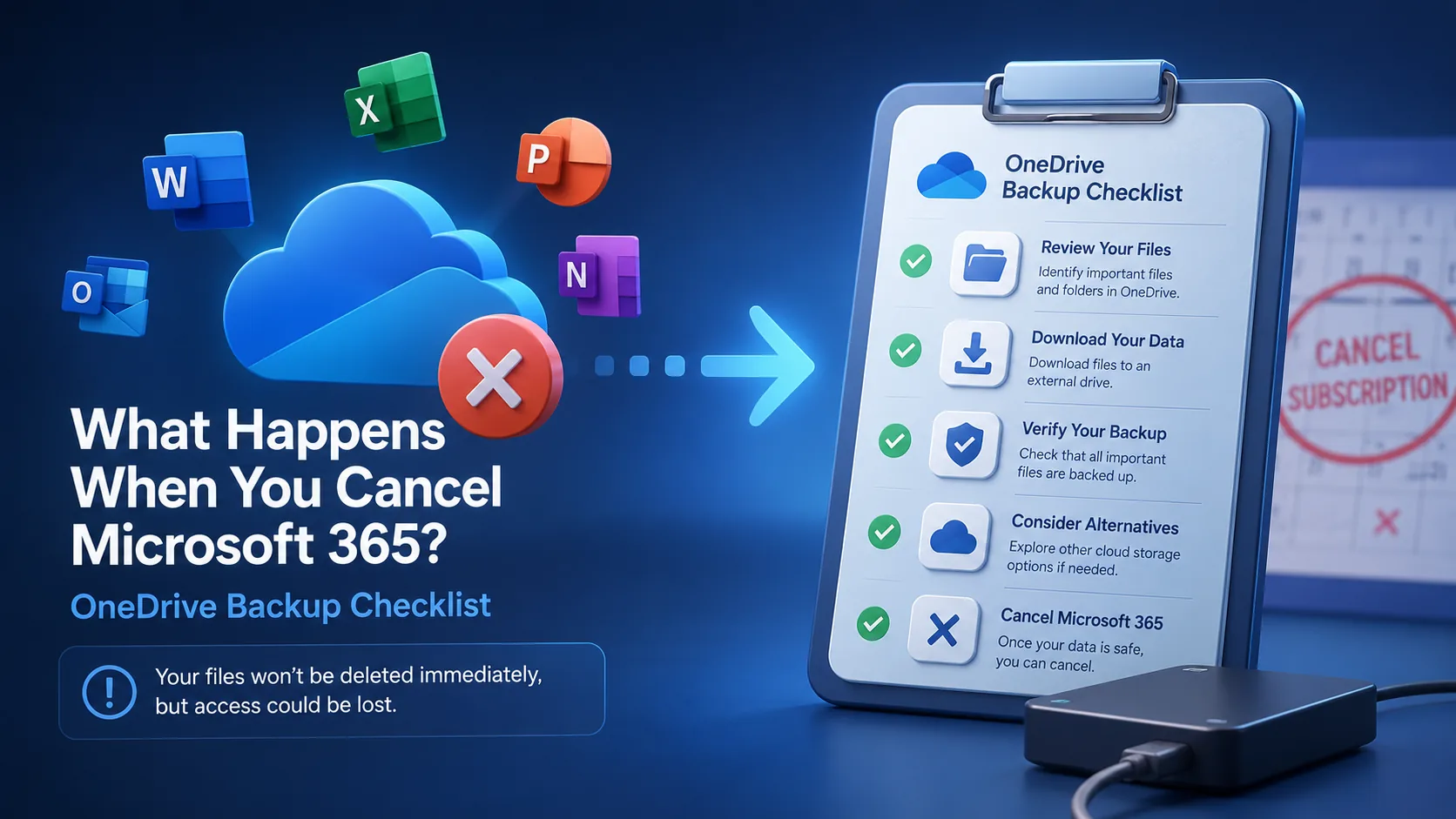
What Happens When You Cancel Microsoft 365? Files, OneDrive & Checklist
7 min read
What is File Hosting? Your Guide to Cloud Storage & Sharing
8 min read